


Cancer is one of the most prevalent diseases in Thailand and remains a leading cause of death. Many cancer patients experience pain from the earliest stages of their illness — more than half report pain at some point during their treatment — and as the disease progresses to advanced or terminal stages, pain becomes both more frequent and more severe.
Cancer pain does not affect the body alone. It impacts mental health, the ability to carry out daily activities, and the overall quality of life of both the patient and their family. Understanding the nature of cancer pain and how it can be effectively managed is essential — not only for controlling symptoms, but for helping patients live as well as possible throughout their illness.
What Causes Cancer Pain?
Cancer pain can arise from several different sources:
-
- Tumour pressure on surrounding structures a growing tumour can compress nearby bones, nerves, or internal organs, generating pain in the affected area
-
- Cancer spread and metastasis particularly when cancer spreads to the bones, which often produces intense, difficult-to-control pain
- Side effects of cancer treatment surgery, chemotherapy, and radiation therapy can all cause tissue or nerve damage that results in pain during or after treatment
Types of Cancer Pain
-
- Neuropathic pain arising from nerve damage or nerve compression; typically described as burning, electric shock-like, shooting, or a crawling sensation beneath the skin
-
- Bone pain caused by cancer that has spread to the bones; usually felt as a deep aching or throbbing, often worse with movement or weight-bearing
-
- Visceral pain originating from internal organs; tends to be difficult to pinpoint and may feel like cramping, pressure, a dull ache, or throbbing; can also be experienced as referred pain in a different location (for example, liver involvement may cause right shoulder pain due to shared nerve pathways)
-
- Phantom pain pain perceived in a body part that has been surgically removed, such as breast pain following mastectomy or limb pain following amputation; this is a neurologically real phenomenon, not psychological, and while often distressing, it typically diminishes over time
- Referred pain pain felt in one area of the body that originates from a problem in a different structure; caused by shared or overlapping nerve pathways between organs and distant sites
Treatment Options
Pain is consistently one of the most distressing aspects of cancer for patients and families. Modern pain management offers a range of effective approaches that can significantly reduce suffering and restore a better quality of daily life.
-
- Medication Medication remains the primary foundation of cancer pain management. Treatment is selected based on pain severity and type, following a stepwise approach:
- Standard analgesics for mild pain
- Opioid analgesics for moderate to severe pain
- Adjuvant medications — including antidepressants, anticonvulsants, and steroids — used alongside primary analgesics to address specific pain types such as neuropathic or bone pain
- Medication Medication remains the primary foundation of cancer pain management. Treatment is selected based on pain severity and type, following a stepwise approach:
-
- Interventional Pain Procedures When medication alone is insufficient to control pain, or when side effects from medication become too burdensome, interventional procedures offer targeted, often highly effective alternatives:
- Interventional Pain Procedures When medication alone is insufficient to control pain, or when side effects from medication become too burdensome, interventional procedures offer targeted, often highly effective alternatives:
-
-
- Nerve block injection : anaesthetic or anti-inflammatory medication injected near the specific nerve or nerve group responsible for transmitting pain; applicable for pain in the back, legs, arms, or face
-
-
-
- Sympathetic nerve block or neurolysis : targets the sympathetic nervous system, which plays a role in visceral and cancer-related pain; neurolysis permanently disrupts the pain pathway, providing longer-lasting relief
-
-
-
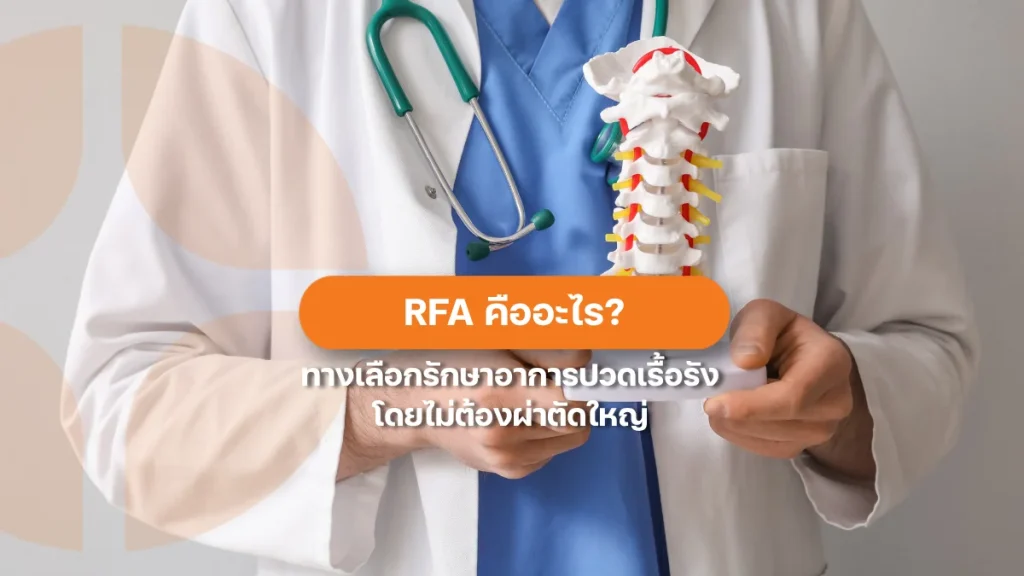
- Radiofrequency ablation : uses targeted heat from a radiofrequency probe to deactivate the specific nerve fibres transmitting pain signals
-
-
-
- Intrathecal drug delivery system (pain pump) : a small implanted device delivers pain medication directly into the cerebrospinal fluid surrounding the spinal cord, achieving
- Spinal cord stimulation or peripheral nerve stimulation : an implanted device delivers low-level electrical impulses to modulate pain signal transmission before it reaches the brain
-
Prevention and Reducing Severity
For People Without Cancer — Reducing Cancer Risk While not all cancers are preventable, these evidence-based habits substantially reduce risk:
ตั้งแต่ต้นโดยปฏิบัติดังนี้
-
- Avoid or quit smoking
-
- Avoid or minimise alcohol consumption
-
- Eat a diet rich in vegetables, fruit, and whole grains
-
- Maintain a healthy body weight and exercise regularly
-
- Receive cancer-preventive vaccinations where relevant and medically indicated — such as the HPV vaccine and the hepatitis B vaccine
- Attend recommended cancer screening programmes as advised by your doctor
For Cancer Patients — Reducing Pain Severity
- Report pain early
: do not wait for pain to become severe before telling your medical team; early pain management is consistently more effective than reactive treatment of advanced pain - Use non-medication pain relief approaches alongside medical treatment
: physiotherapy and appropriate physical activity, mindfulness, breathing techniques, and relaxation practices can all reduce pain intensity; stress and anxiety are known to amplify pain perception - Attend to psychological and social wellbeing
support from family, patient communities, and mental health professionals plays a meaningful role in reducing the overall burden of pain and building the resilience needed to cope with a serious illness
Pain Management at Bangkok Interventional Clinic
At Bangkok Interventional Clinic, we focus on personalised, in-depth pain management tailored to each individual.
- All patients are evaluated and treated by a board-certified pain specialist, ensuring accuracy, safety, and effective care.
- Targeted interventional procedures for fast and effective symptom relief
- Patient education to support sustainable, long-term self-care
Our goal is to meaningfully improve the quality of life of every patient we treat. If you are living with pain that affects your daily life, the right diagnosis and the right treatment plan are where change begins.